
Seventh Solar Wing Unfurled: Menon and Kutryk Complete U.S. Spacewalk 100 in 7 Hours 11 Minutes
NASA astronaut Anil Menon and Canadian Space Agency astronaut Joshua Kutryk finished U.S. Spacewalk 100 on 29 October 2026 after installing and deploying the seventh roll-out solar array on the International Space Station. The 7-hour, 11-minute outing leaves one final array to be fitted on 5 November.
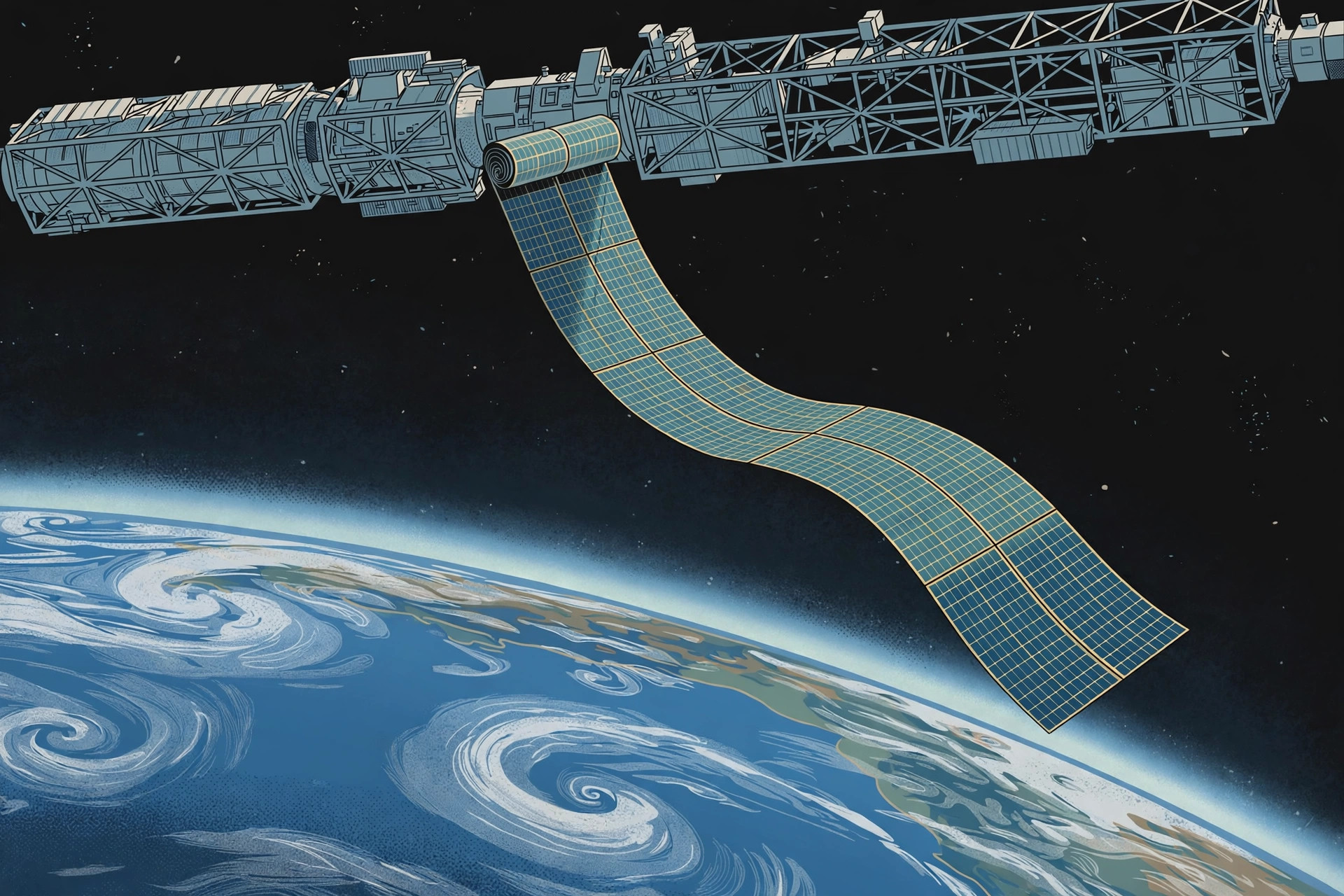
NASA astronaut Anil Menon and Canadian Space Agency astronaut Joshua Kutryk completed U.S. Spacewalk 100 on 29 October 2026, finishing the job they had set out to do outside the International Space Station: fitting and unfurling the seventh International Space Station Roll-Out Solar Array, known as an IROSA. According to NASA, the pair returned inside at 3:08 p.m. EDT, after 7 hours and 11 minutes outside the station.
The walk had begun at 7:57 a.m. EDT the same day. For readers in India, that was 5:27 p.m. IST on 29 October, with the finish coming at 12:38 a.m. IST on 30 October. The duration ran a little beyond the roughly six hours and 45 minutes that had been planned, but NASA's account of the day describes the central task as done: the new array was both installed and deployed on the station's 2A electrical power channel.
A longer outing, with the main job finished
The extra time does not, on NASA's published account, point to a failure. The agency's outcome report presents the installation and deployment as completed, and then notes additional work that the crew managed to fit in. Menon and Kutryk also completed several get-ahead tasks intended to prepare for the next spacewalk. NASA does not detail those tasks in its outcome report, and this article does not fill in that gap.
That distinction matters because a spacewalk is rarely a single action. The headline task is the array itself, but the crew's time outside also includes moving equipment, securing hardware and setting up the next outing. In this case, the preparatory work is directly useful: the same two astronauts are scheduled to go out again within days.
Why the seventh array matters
An IROSA is a thin, flexible solar blanket that launches folded and then unrolls in orbit, mounted in front of one of the station's original solar wings. The design is a response to age. The station's first wings have spent more than two decades in orbit, and their output has fallen over time, even as the laboratories, life-support systems and visiting vehicles drawing on the power system have grown.
The seventh array, on the 2A channel, therefore adds generating capacity rather than replacing an old wing outright. NASA says the new array will provide additional power to support critical operations, including a safe and controlled deorbit at the end of the station's life. That last point is easy to overlook in the excitement of a spacewalk, but it is central to why the upgrade is being finished now: the station needs enough reliable power not only for its remaining science, but for its eventual retirement to be managed safely.
One panel still to go
The upgrade is not yet complete. After the 5 November spacewalk, NASA says, the roll-out arrays will be fully installed and the station's power system augmentation will be finished. On that outing, Menon and Kutryk are scheduled to install the eighth and final IROSA, on the 3B power channel.
Once all eight are in place, NASA puts the gain at up to 30 per cent, lifting the station's power generation capacity from 160 kilowatts to approximately 215 kilowatts. That figure describes the full set, not the seventh array alone, and it is worth keeping the two separate: 29 October took the project to seven of eight, with the final step still ahead.
A milestone walk, counted two ways
The numbering around this spacewalk can be confusing, because NASA counts it in two tallies. It was U.S. spacewalk 100, the agency's count of American station spacewalks from the Quest airlock without a space shuttle present. It was also the 285th spacewalk in support of station assembly, maintenance and upgrades, a broader count that includes the full history of building and maintaining the orbiting laboratory.
For the two astronauts, the personal counts were different. NASA says the outing was Menon's fourth spacewalk and Kutryk's first. That pairing — an experienced spacewalker alongside a first-timer — was part of the story from the start, and the completed walk now gives Kutryk his first outing outside the station, with a second scheduled a week later.
What happens next
Attention now turns to Thursday, 5 November, when Menon and Kutryk are due to install the eighth and final array. NASA says it will provide live coverage of that spacewalk. If that outing goes as planned, the five-year roll-out array programme will be complete, and the station will enter its final years with the upgraded power system that the past several spacewalks have been building, panel by panel.
MagnetDaily will report the outcome of the 5 November spacewalk when NASA confirms it. The station's earlier preview coverage remains separate: this article reports only the completed 29 October result.