
'Build, Don't Just Adopt': Modi Opens ESTIC 2026 With a Call for India to Create the Technologies of the Future
Prime Minister Narendra Modi inaugurated the Emerging Science, Technology and Innovation Conclave (ESTIC) 2026 at Bharat Mandapam in New Delhi on Tuesday, telling scientists and startups that a developed India will be built on research, discovery and innovation — and that the country must move from adopting foreign technology to creating its own, with self-reliance in critical technologies and a warning not to take AI answers at face value.
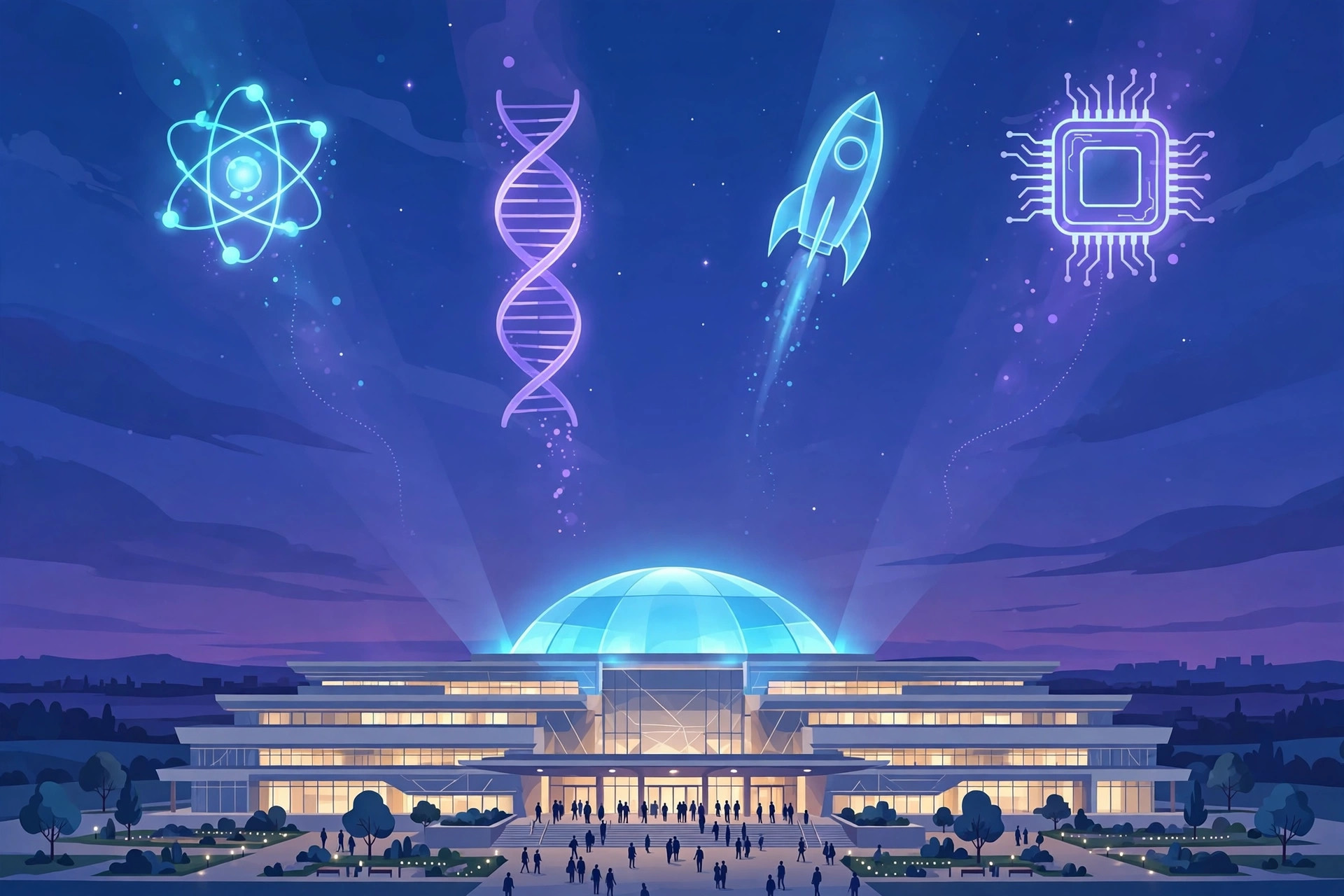
Prime Minister Narendra Modi on Tuesday inaugurated the Emerging Science, Technology and Innovation Conclave — ESTIC 2026 — at Bharat Mandapam in New Delhi, opening three days of deliberation on where Indian science should go next. The conclave, organised by the Council of Scientific and Industrial Research (CSIR) under the theme 'Creative Minds, Catalyzing Science, Empowering Technologies', runs from 27 to 29 October and brings together scientists, researchers, academics, policymakers, industry leaders, startups and international experts.
The Prime Minister's message, delivered to that audience, was about ambition. A developed India — Viksit Bharat — will be built on strong foundations of scientific research, discoveries and innovation, he said, and the country's goal should no longer be limited to adopting technologies developed elsewhere or making small improvements to them. India, he argued, should create new technologies for itself and the world, and help shape the direction global innovation takes.
Self-reliance in critical technology
A recurring theme of the address was self-reliance where it matters most. Modi stressed that India needs indigenous strength in critical technologies — the capabilities a country cannot safely depend on others for — spanning energy security, space, nuclear technology, semiconductors and artificial intelligence.
He pointed to recent milestones as evidence the shift is under way. India's 500-megawatt prototype fast breeder reactor reached its first criticality a few months ago, a step in reducing dependence on imported nuclear fuel. In space, Indian startups have placed satellites in orbit on their first attempts using rockets made in India, and the country has acquired the capability for satellite docking — the kind of foundational technology that future stations and deep-space missions are built on.
A caution on AI
Artificial intelligence ran through the speech as both opportunity and warning. Modi cautioned against accepting information generated by AI without verification, making the point that the speed with which AI produces answers should not be mistaken for accuracy. The remark lands in a year when AI tools have moved into research, education, industry and everyday life, and when the gap between a fluent answer and a correct one has become a practical problem for everyone who uses them — a case, in his framing, for keeping scientific rigour and human judgement at the centre of the technology rather than behind it.
Twelve themes, 150 startups
The conclave's deliberations span 12 thematic areas, including artificial intelligence, biotechnology, advanced materials, manufacturing, healthcare, energy, climate and ocean sciences, with the discussions aimed at research priorities, national capability and the perennial challenge of translating laboratory advances into products and services people actually use.
Alongside the sessions, a technology and innovation exhibition showcases indigenous scientific work and emerging technologies, with around 150 stalls run by deep-tech startups, plus technology demonstrations, documentaries, informational kiosks and augmented and virtual reality experiences. A new Global Connect Networking Event adds more than 300 invited participants from academia, research institutions and industry in India and abroad, intended to open routes to international research partnerships and to move innovations from laboratories to markets.
What happens next
ESTIC runs through Thursday, 29 October, and its test will be what survives the closing session: partnerships actually formed, research priorities actually funded, and startup technologies actually picked up by industry. The Prime Minister has set the direction in public — build, do not just adopt — and the conclave's remaining two days are where the institutions in the room begin, or do not begin, to act on it. MagnetDaily will report the conclave's concrete outcomes as they are announced.